The Little Girl’s Lighthouse
Readers of this blog will know that I’m regularly trawling eBay for old postcards depicting Anglesey sights (or more recently, the Lighthouses of Wales, while writing my new book). Every day I get email notifications of new listings. Usually they are the same old scenes I’ve seen many times before, but occasionally a unique, unusual and very interesting item pops up.

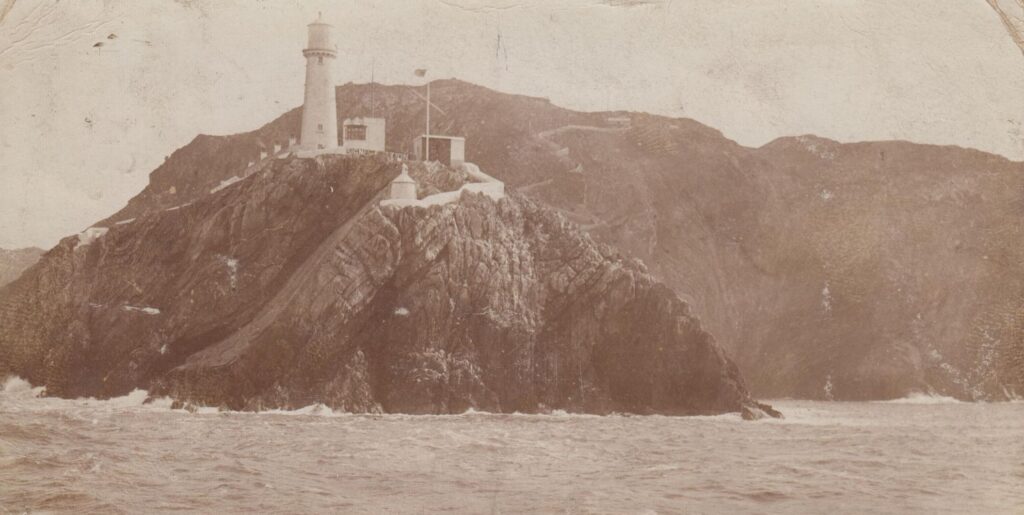
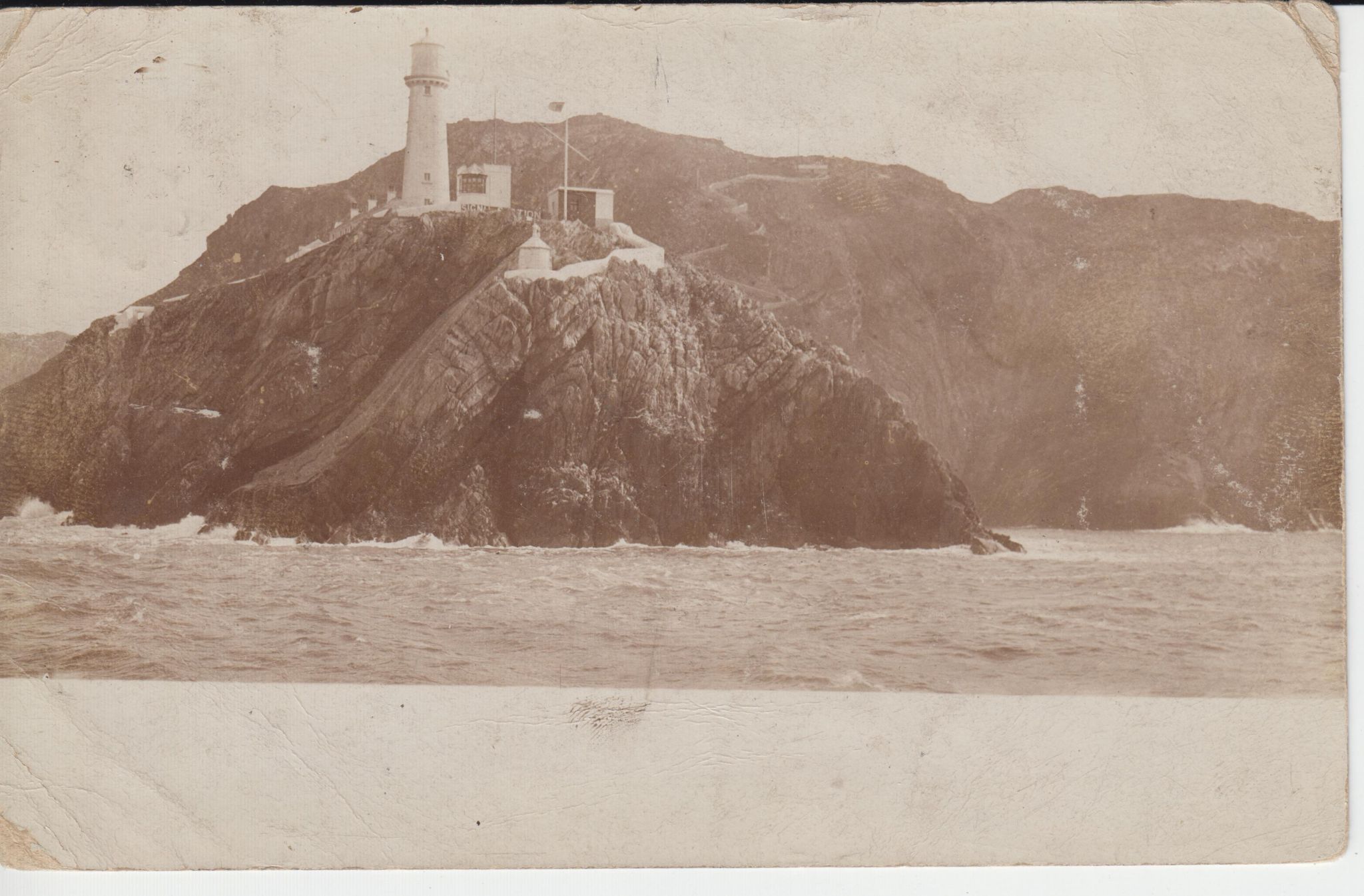
Recently a new postcard of South Stack was listed. Most views of this lighthouse are taken from the same spot, showing the island and lighthouse buildings side-on from the south-east. But this one was taken from the sea off the west end of the island, looking up at the tower with the cliffs and the 400 step descent in the distance.
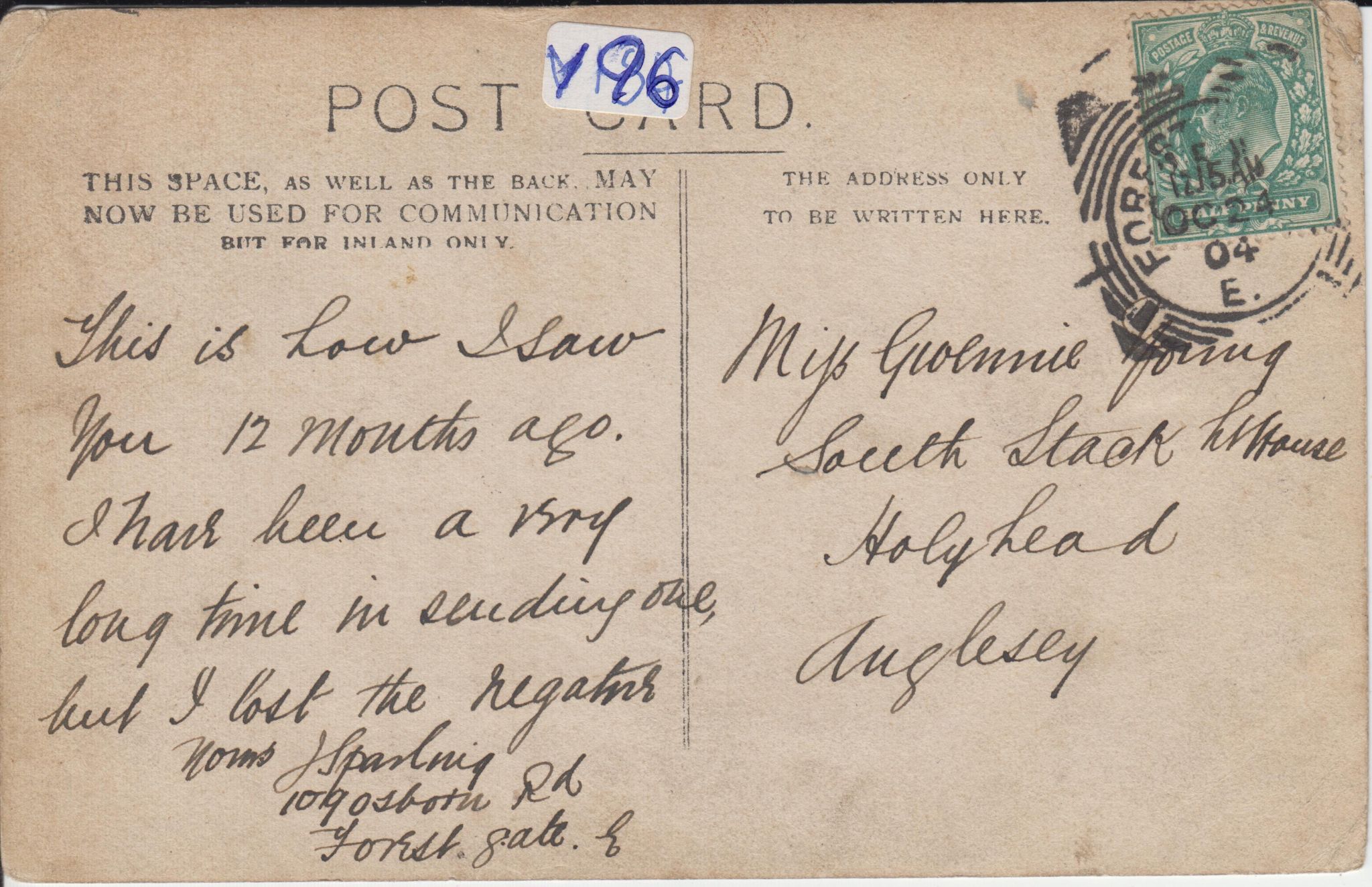
Looking at the reverse, it was postmarked 24 October 1904 in Forest Gate, London. What really caught my eye was that it was addressed to “Miss Gwennie Young, South Stack Lighthouse, Holyhead, Anglesey”! The very intriguing message began “This is how I saw you 12 months ago”. The sender apologised for taking so long to send it, but he had lost the negatives. It sounds like the sender was also the photographer and this was a custom-made postcard (a Real Photo Postcard, RPPC) rather than a mass produced printed one. And to add to the mystery, why was he taking the photo from a boat?
Who were these two people? The first thing I do in cases like this is look at the censuses. The 1901 census was just three years before this card was sent, so was Gwennie Young living at South Stack then? Sure enough, the Principal Keeper at the lighthouse was William Young, and one of his children was Eva Gwendoline Young, aged 9. So when the excited little girl received this personalised card she would have been 12 years old.
The senders of postcards are usually much more difficult to track down. Often they will be signed with just a first name or initials, if signed at all. Fortunately this sender not only gave the surname, but also the home address. The name was J. Sparling, living at 109 Osborne Rd, Forest Gate (which is part of West Ham, East London). Off I go to the 1901 census again, but there was no one by this name at 109 then. Searching for just J. Sparling without the full first name, age or birthplace brought up a lot of possibilities, but there was a James Sparling living in Forest Gate, just a couple of blocks away from 109 Osborne Rd. His occupation? “Lighthouse Engineer”! I think I’ve found the sender.
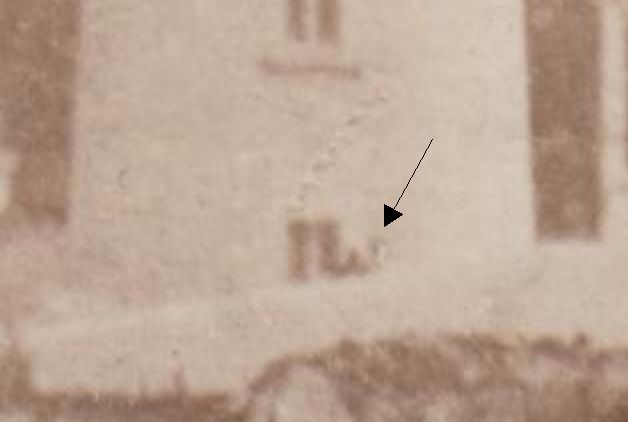
A scenario now began to form in my mind. Perhaps lighthouse engineer James was visiting South Stack to do some work, was on a boat around the island taking photos and noticed Gwennie waving to him from the lighthouse. When back on land he promised to send her a copy of the photograph. Looking very closely at the photograph, are there two figures standing behind the wall at the base of the lighthouse?
Gwennie Young

Both Gwennie and James had interesting lives that tell stories of life in the lighthouse service. Gwennie was born 28 May 1891 in Pembroke Dock, daughter of lighthouse keeper William Young and his wife Bessie Hoy (whose father was a gunner in the Royal Navy). At the time William was one of three keepers stationed at South Bishop lighthouse, which is perched on a small rocky islet 8 km off of St David’s Head in Pembrokeshire. For offshore lighthouses like this the keepers would spend several weeks on duty, then make the long boat trip back to spend a month or so with their families.
William was born nearby in Solva, Pembrokeshire, son of a blacksmith, but entered the lighthouse service at the age of 20. His brother Thomas, who was 17 years his senior, also became a lighthouse keeper in his mid-20s after a period learning the blacksmithing trade from his father.
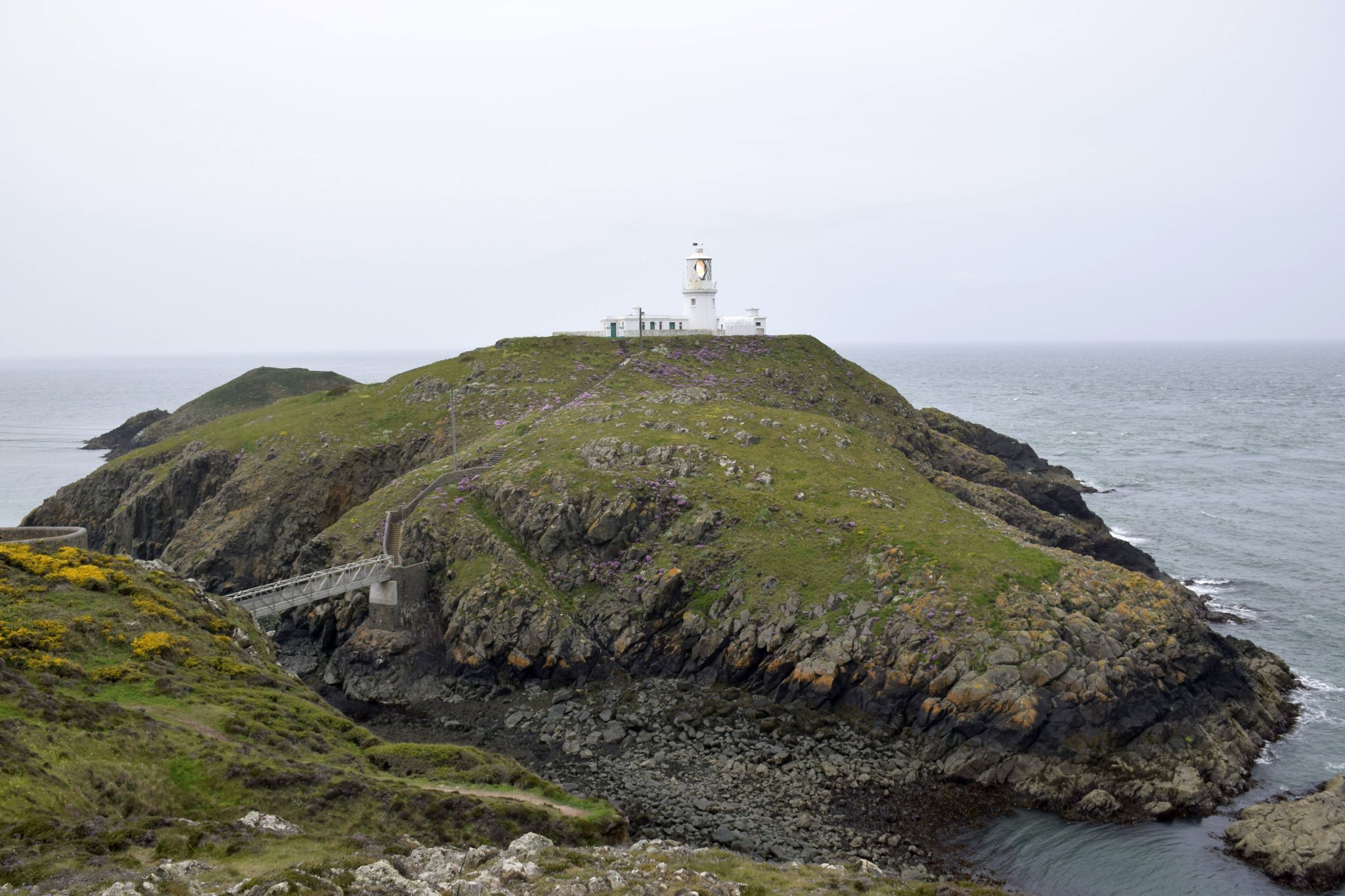
William was initially stationed at Plymouth Dock lighthouse, where he met and married Bessie. As was common for lighthouse keepers working for Trinity House (the lighthouse authority for England and Wales), he moved station every few years, working at Start Point, Devon, then South Foreland in Kent. In 1884 he was sent to Basses lighthouse, off the coast of Ceylon (Sri Lanka today), for three years. On return to Britain he then was stationed at Souter Point in Tyne and Wear, before going to South Bishop just before Gwennie was born. After nine years there he was promoted from Assistant Keeper to Principal Keeper, when he was then placed in charge of South Stack lighthouse for eight years. He finished his career at Strumble Head in Pembrokeshire before retiring, first to a cottage near St Ann’s Head lighthouse overlooking the entrance to Milford Haven, then back to Pembroke Dock.
During William’s tenure at South Stack the lamp in the lighthouse was greatly improved. In 1906 the previous wick-based paraffin lamp was replaced by an incandescent burner, where vapourised paraffin was fed to a glowing mantle, which sat in the middle of a rotating lens that produced the flashes of the lighthouse. Newspaper articles from the time note that little Gwennie had the honour of flicking the switch that set the lens into motion.

By 1911 the family had moved back to Pembrokeshire and it was there in 1916 that Gwennie married Thomas Howard Woodruff. He was the son of a lighthouse keeper and was born at Trwyn Du lighthouse on Anglesey. He had joined the Royal Navy in 1909 and spent most of his career as a railway clerk in various dockyards, mainly Pembroke. They had two children born there, and Gwennie’s parents also lived with them.
Thomas retired from the Royal Navy in 1930, but continued working as a dockyards clerk. In 1939 he was based at Gillingham, Kent, while Gwennie was living in Holyhead, Anglesey. Her eldest brother William Hoy Lile Young was also living in Holyhead, working as a clerk for the Trinity House lighthouse depot at the port, after having been a lighthouse keeper for a few years. Her sister Eleanor had married a man who also worked at the Holyhead lighthouse depot, but they had retired to Bognor Regis by this time. The family had lots of connections to lighthouses.
It’s not known where they lived in the years after the 1939 records, but Thomas died in 1954 in Newton, Lancashire and Gwennie in 1976 in Bath.
James Sparling
So, who was the postcard sender? James Sparling was born in Stirling, Scotland in 1850, the son of soldier Joseph Sparling and Helen McGregor. His father, who was in the 33rd (The Duke of Wellington’s) Regiment of Foot, fought in the Crimean war a few years later. He was then deployed to India, where two more sons were born. Joseph died there in 1860 and his wife remarried. They had moved back to England by 1864.
In his early 20s James was working as an engine fitter in the Limehouse area of the bustling London docklands. In 1875 he married Emily Creamer, daughter of a gardener from Charlwood, Surrey. They soon moved to Penzance, Cornwall, where their first son James was born. He had started working for Trinity House and was an engineer on one of their steamship tenders, which serviced their lighthouses.
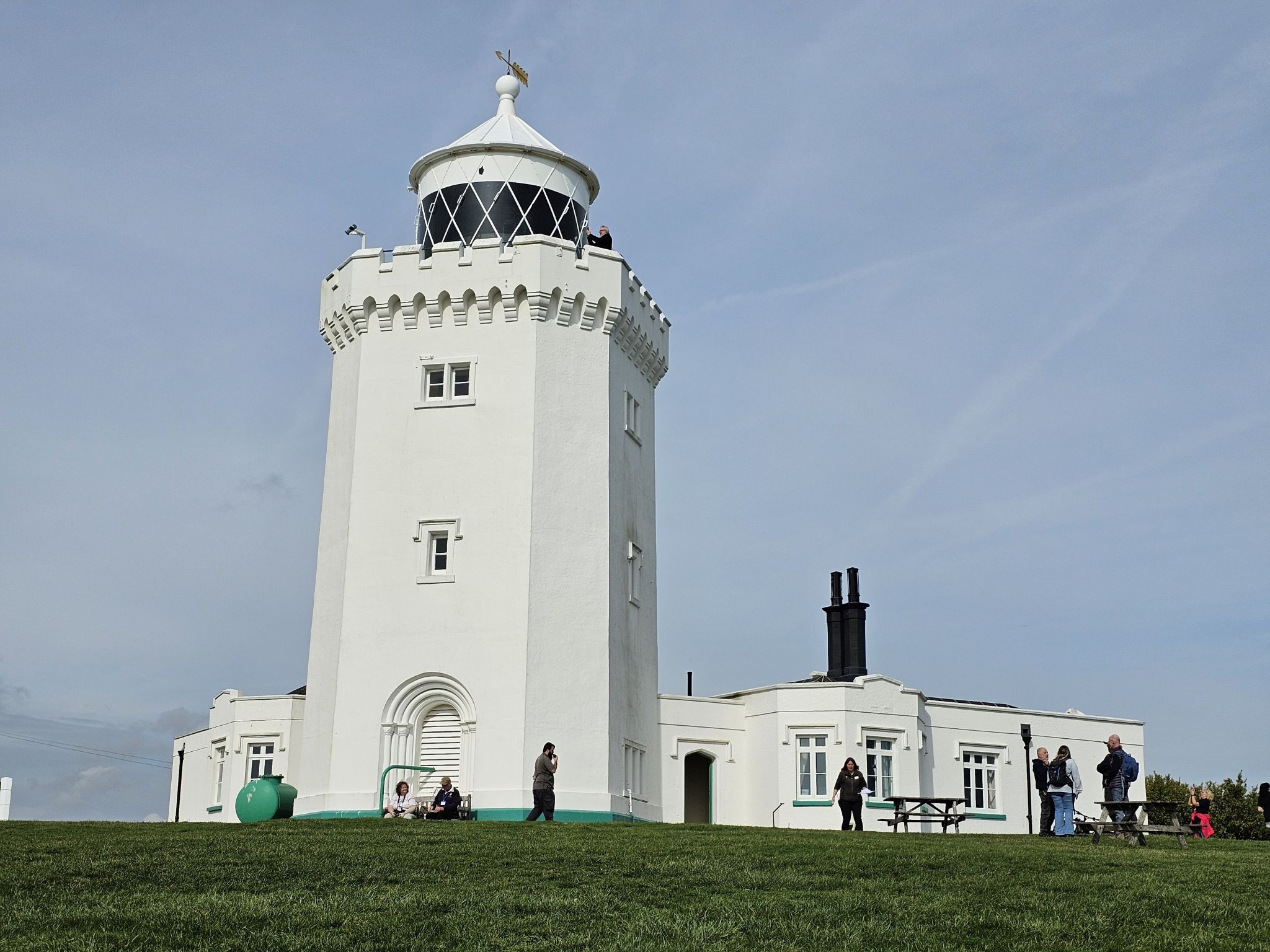
By 1881 the family had moved to South Foreland, near Dover, Kent, where there are two lighthouses. Working alongside the seven lighthouse keepers, his occupation was listed in the census as “Engineer in charge of electric lighthouse”. South Foreland was the site of the first electric lamp in a lighthouse when it was installed by the electrical pioneer Michael Faraday in 1858. It was the location of experiments by Trinity House in improving electrical lamps for many years, and Sparling was taking up the mantle in developing these improvements. This may have followed on from his previous job in Cornwall. Lizard Point lighthouse near Penzance had its first electrical light installed in 1878, when Sparling was living there. Was he involved?
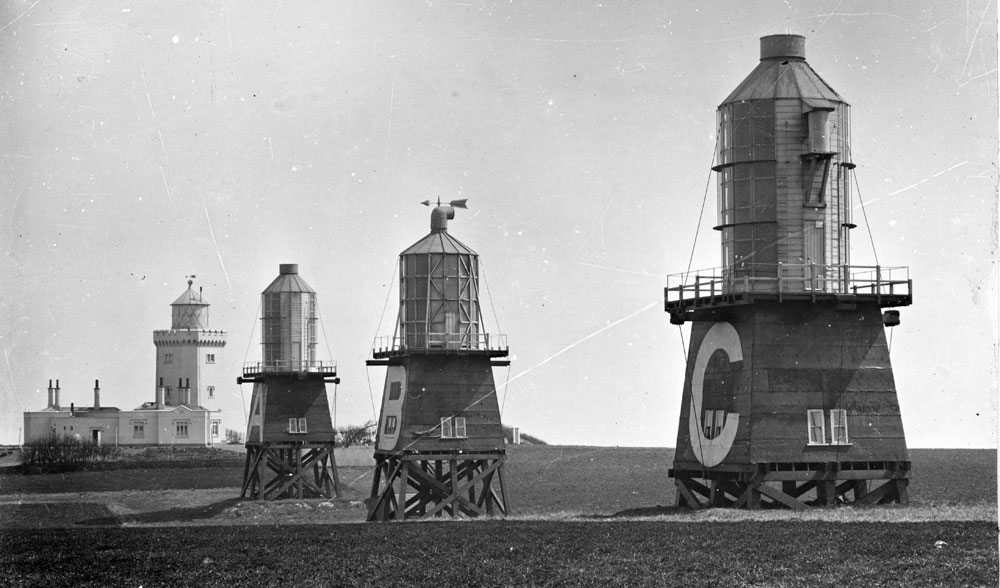
During Sparling’s time at South Forelands a remarkable addition was made to the landscape. Joining the two existing lighthouses were three more lighthouse lanterns mounted on wooden platforms. Marked A, B and C in large letters, these towers were used in experiments comparing different types of lamps. Each tower would have a different lamp, and their brightness could be compared from a set distance.
He also became an expert promoting the work of Trinity House. In 1904 he was invited to speak to the Institute of Marine Engineers about the corporation and the construction and operation of their lighthouses, including his work on electrification. It was illustrated with images of the various lighthouses, projected by a magic lantern and probably created using the same camera he used for the photograph sent to Gwennie.
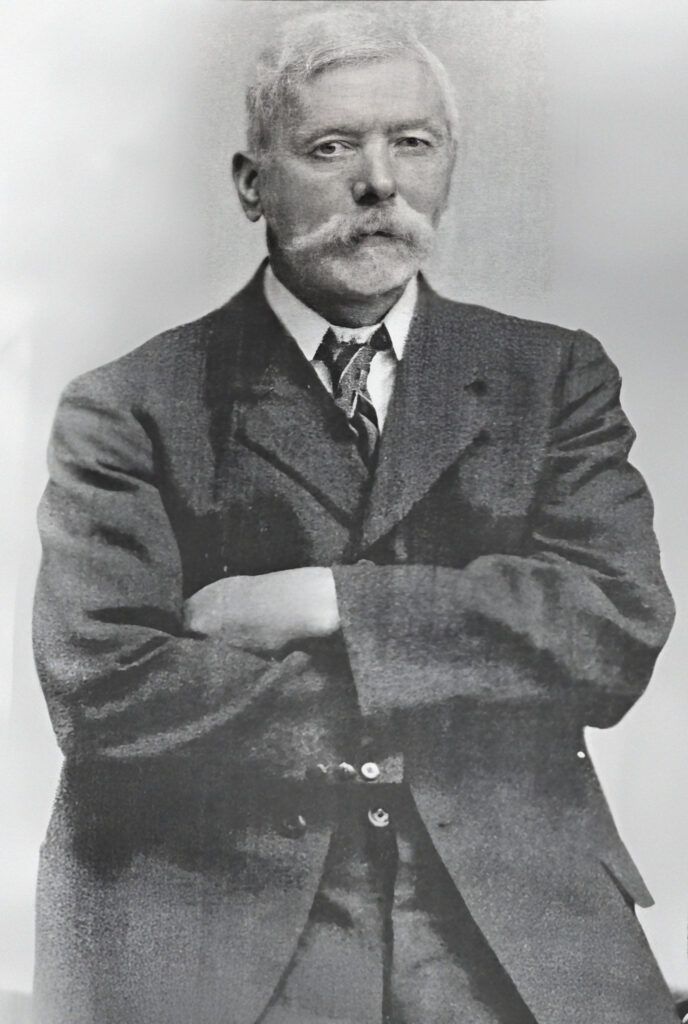
After nine years at South Forelands, Sparling moved on. He left with the esteem of the local community, being presented with a marble and gold clock. Moving back to London, he settled in Forest Gate and became a foreman and superintendent of Trinity House’s engineering works. He worked there over the next two decades before retiring to Bournemouth, where he died in 1927.
During his time in charge of engineering works for Trinity House Sparling probably travelled around many lighthouses to plan equipment upgrades and inspect the systems. He is said to have gone back to South Foreland in 1898 where he was present when the inventor Guglielmo Marconi made the first ever ship-to-shore radio transmission, sending Christmas greetings from the lighthouse to the crew of the East Goodwin lightship, 12 miles distant. And he clearly was at South Stack in 1903, when he took the postcard photograph.
On these tours he would have met up with old friends. The principal keeper of South Stack, Gwennie’s father William Young, had been at South Foreland for four years at the same time that Sparling was there, so they knew each other well. And he clearly made a friend with his daughter. Did she treasure this photograph? How did it make its way to a postcard collector/seller in Manchester, from whom I bought it? That is still unknown, but the mystery of the sender and receiver and how their paths crossed has been solved, shedding new light on life in the lighthouse service.