
The South Stack Telegraph Station
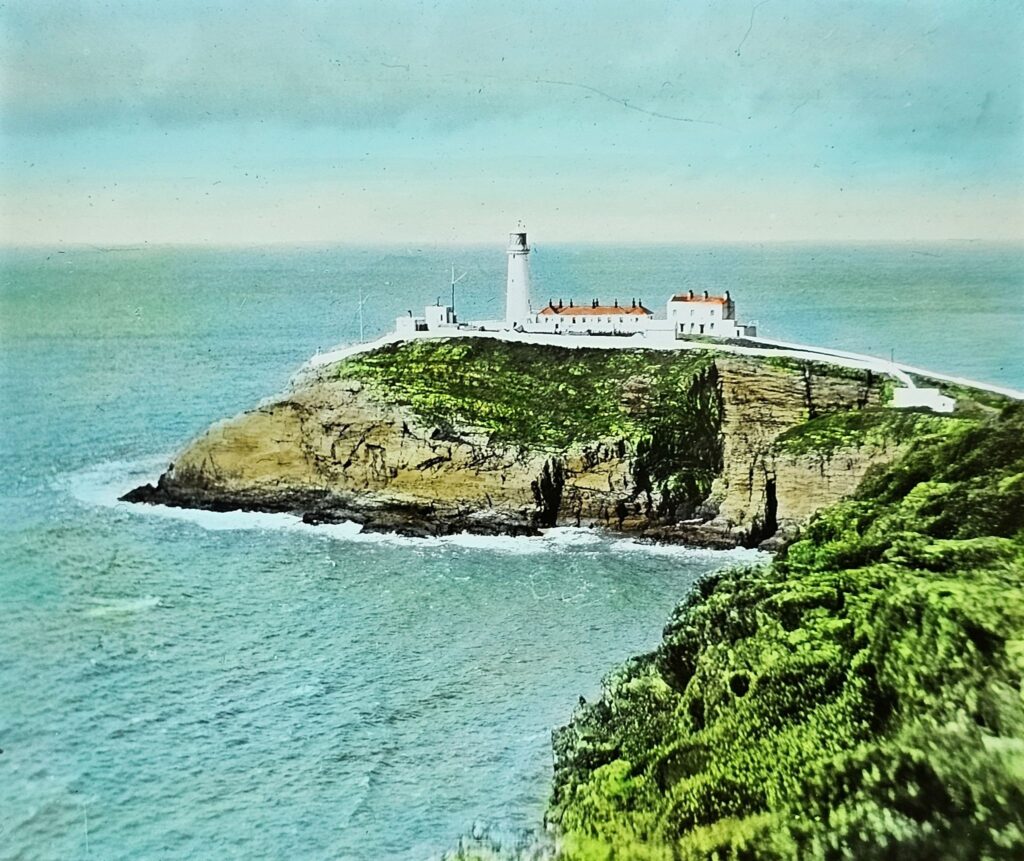
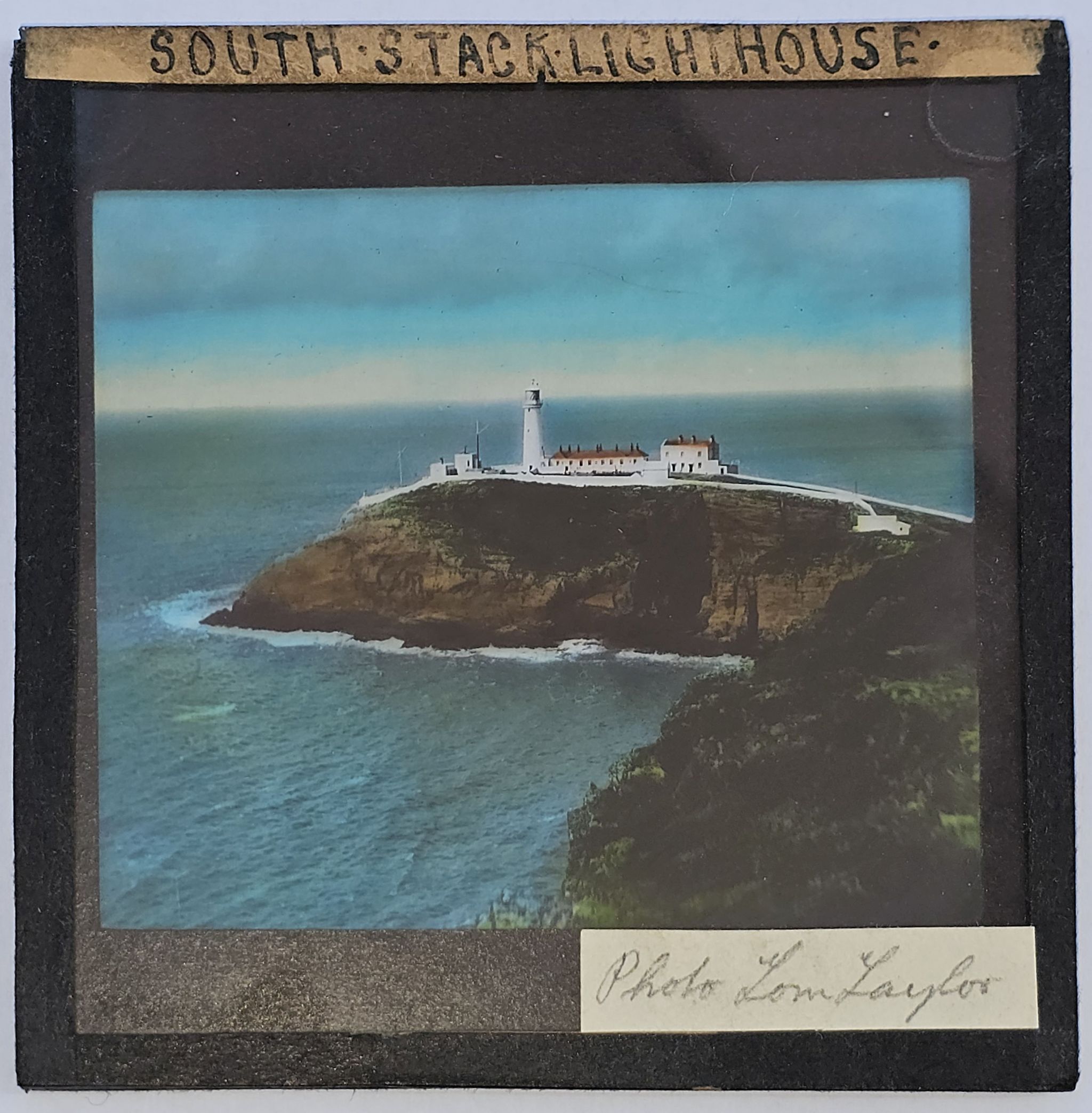
Another nice eBay find has dropped through the letterbox. I’m always on the lookout for items related to Welsh lighthouses (some of which have appeared in my latest book Lighthouses of Wales). I recently spotted a nicely hand-coloured magic lantern glass slide of South Stack lighthouse.
Once unpacked I got out my magnifying glass to have a closer look at it in advance of digitising it. I was particularly looking at the different buildings, as many have risen, changed and disappeared throughout the lighthouse’s history. One thing looked odd to me, and when I compared this to other late 19th – early 20th century images that I realised what it was. The building on the right was larger than I’d seen in most other photos, with three sets of chimneys and three upstairs windows rather than two.
That building, which no longer exists, was the telegraph operators’ dwelling. Telegraph systems have been used for centuries to communicate over long distances much faster than could be done by humans or animals actually carrying the message. Early systems would use optical means, for example displaying different flags or using semaphore codes. These could be viewed by telescope between distant sites within line of view of each other.
In 1827 the Liverpool Docks company set up an optical telegraph system between Holyhead and Liverpool. This allowed for the relaying of news of approaching ships destined for the Docks, as well as weather reports and other messages. A station on the northern slope of Holyhead Mountain would display signals that could be seen eight miles away at Cefn Du in Llanrhyddlad, from where it would be relayed to Carreglwyd, then to Mynydd Eilian near Point Lynas, followed by Puffin Island and further along the North Wales coast to Liverpool. A message could reach the ship owners and port authorities in less than five minutes.
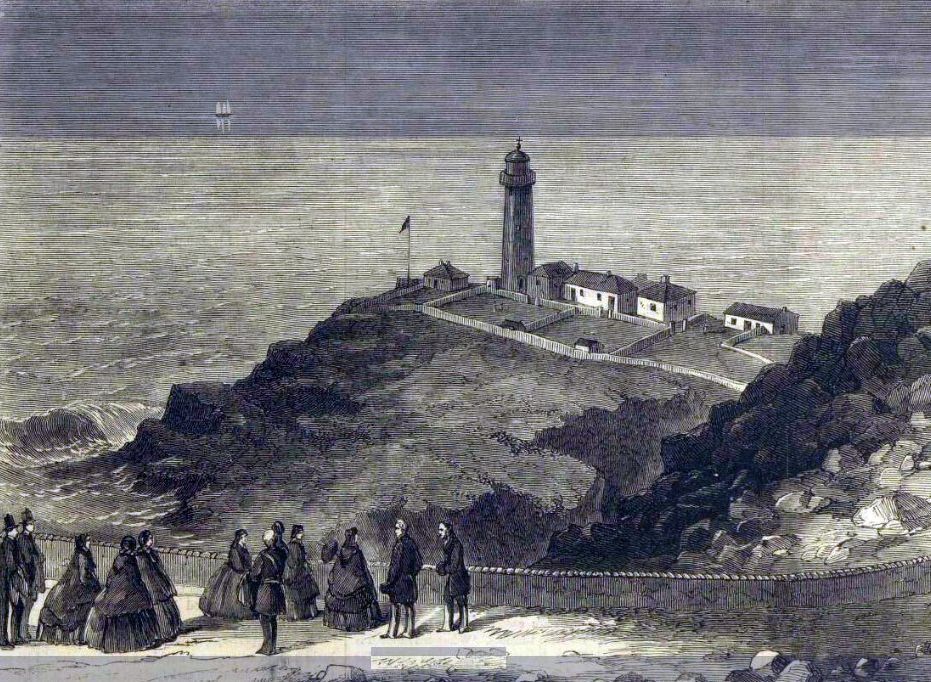
A couple of decades later electrical telegraphs began to be developed and in 1861 Liverpool Docks upgraded their system to electricity. Since line of sight was no longer required the stations could be located at places more convenient to the operators and suitable for observing approaching ships. South Stack was chosen for the new telegraph station. An old, redundant keeper’s cottage at the western tip of the island, below the lighthouse tower, was adapted by adding an extension and first floor to serve as the observation and signalling room as well as accommodation for the two operators and their families.
William Matthias, who had been the main operator of the optical telegraph, moved to South Stack with his family to work with the new technology. He had previously been stationed at both the Puffin Island and Mynydd Eilian signal stations, where he met his Llaneilian-born wife Miriam Williams. They had six children, but she sadly died in 1867. By 1871 he and the children were still at South Stack, along with William’s mother Mary Ann and the 17 year old assistant telegraph operator William Richard Peterkin.
Even after the extension work, the three accommodation rooms in the signal station building would have been cramped with so many people. By 1881 William Mathias had moved on to Bidston lighthouse in the Wirral, and was replaced at South Stack by his previous assistant at the optical telegraph George Pierce, who also had six children with his wife Miriam, with one more born later that year.
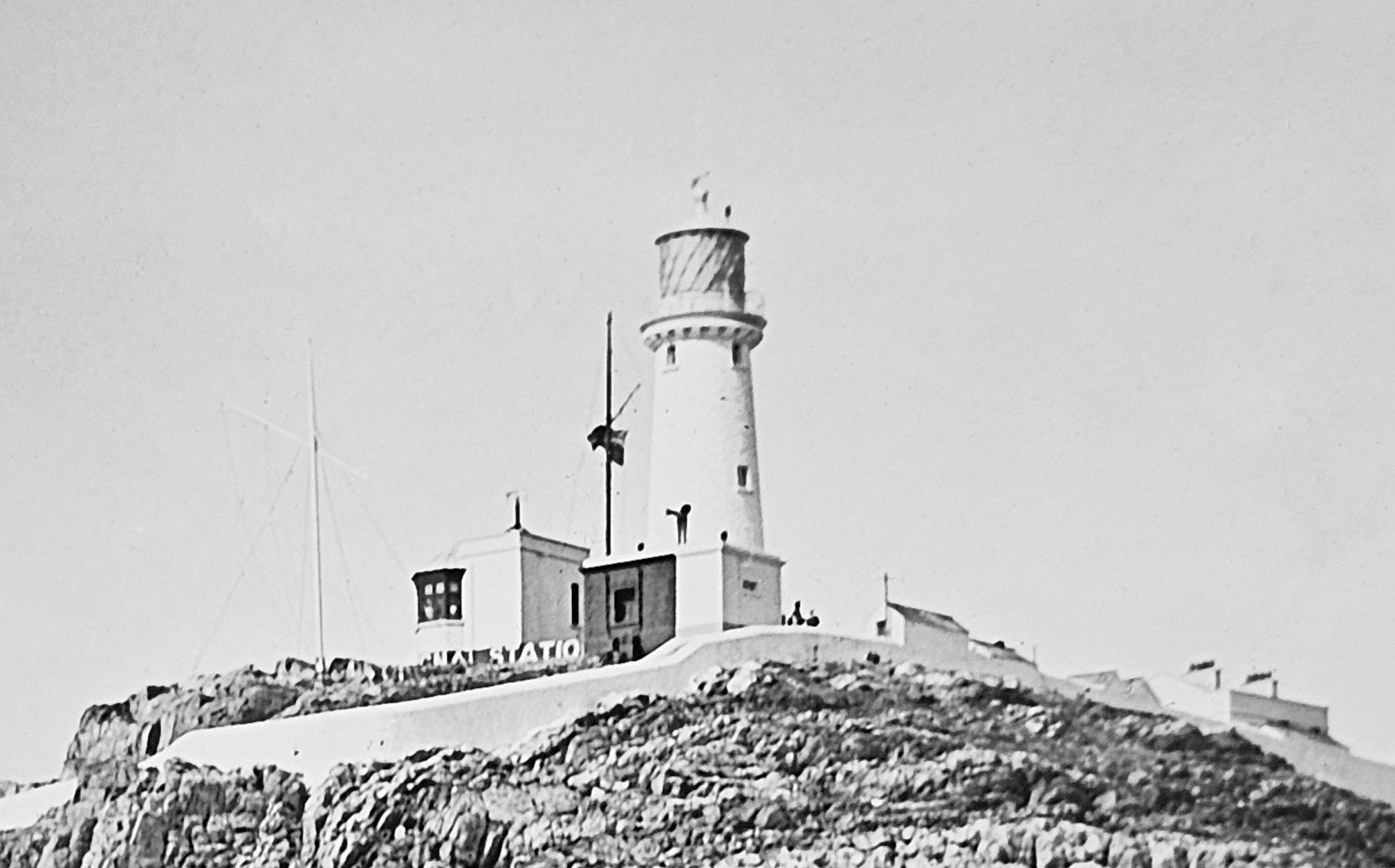
After serving for two decades, the old and cramped building was demolished in 1885 and replaced with a purpose built lookout room. At the same time a more commodious accommodation building was built at the other end of the complex of lighthouse buildings. This two story building rose above the single story buildings housing the lighthouse keepers and the storage areas. With three bedrooms and two living rooms, as well as a kitchen, scullery and pantry, it provided adequate space for the growing family and the assistant.
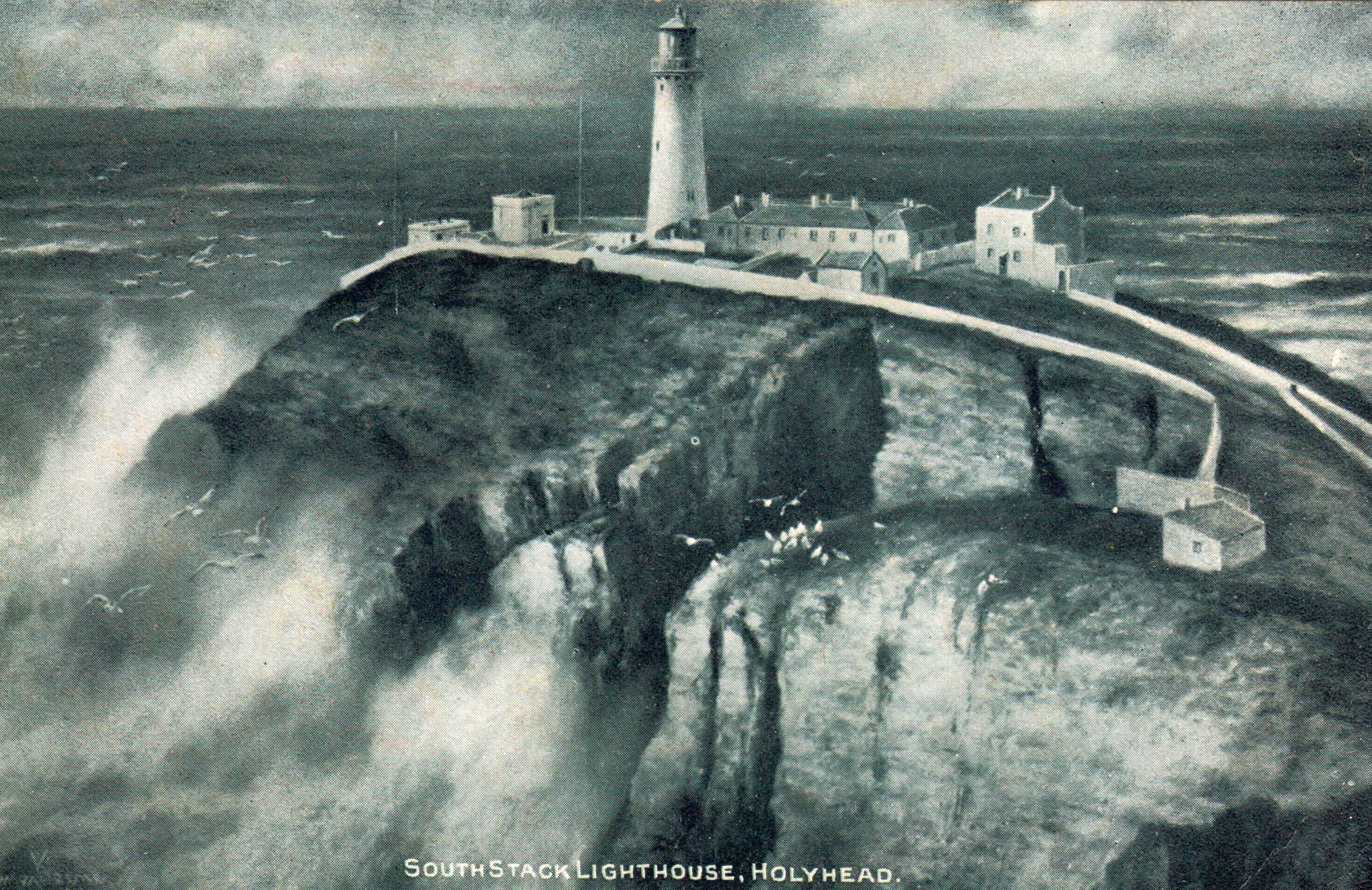
The census of 1891 saw just three people in the house, telegraph operator Morris Griffiths, his wife Eleanor, and assistant Robert Eccles. But by 1901 another growing family had moved in. James Dodd and his wife Ann then had three children, but five more were eventually added to the family. They weren’t the only young ones on the island; lighthouse keeper William Young also had children, including Gwennie, who I wrote about in my blog The Little Girl’s Lighthouse.
In 1907 Mersey Docks, who were still operating the telegraph station, added an extension to the western end of the building, with a separate entrance into the two bedroom flat with scullery and living room, a third set of chimneys and an extra window at the front on both stories. This housed an additional telegraph operator.
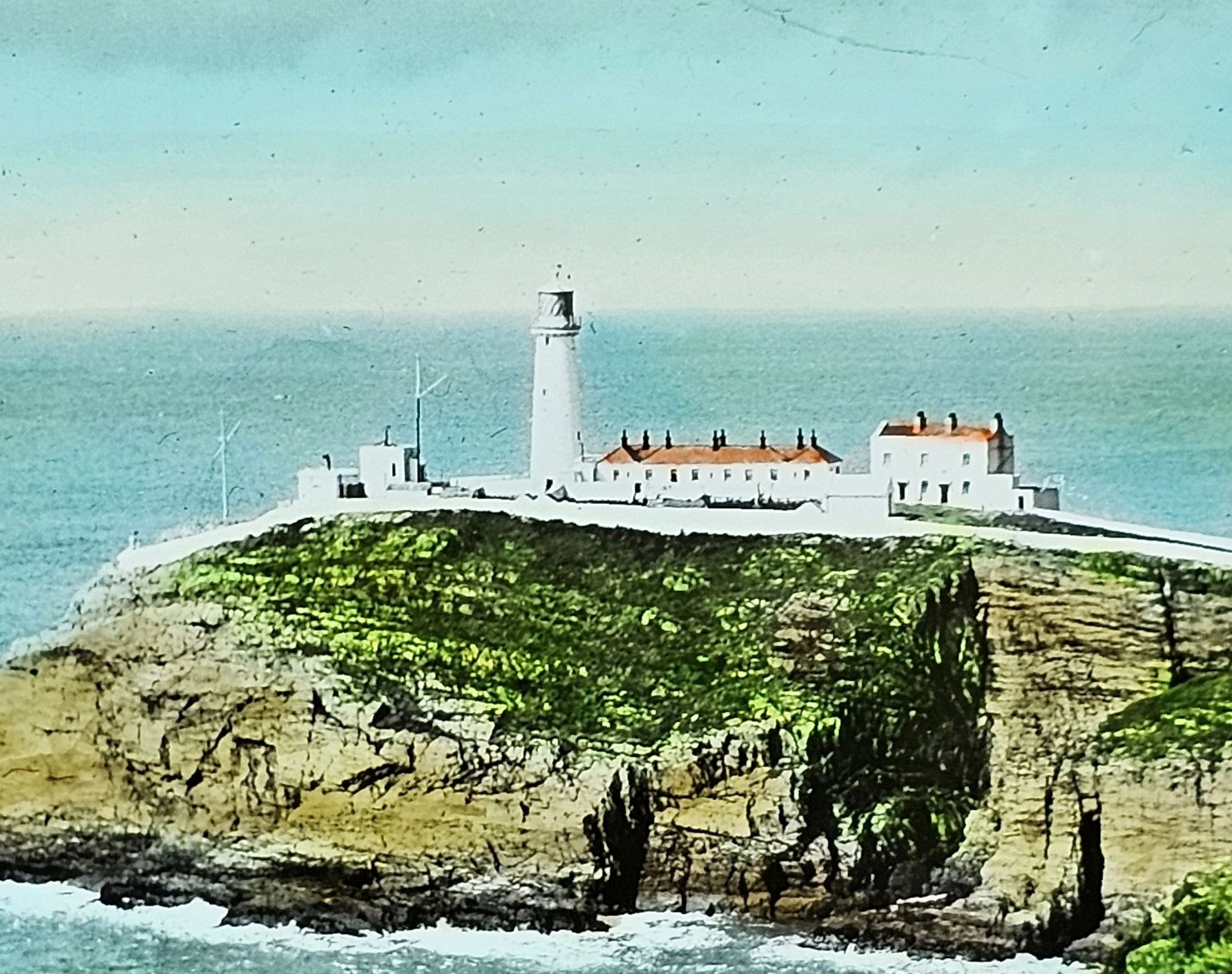
This expanded building is the one seen in my recently purchased glass slide, so very helpfully allows me to date the slide as having been created sometime after 1907. Looking back through a collection of images of old postcards of the lighthouse, I can spot a couple of others that were produced after that date.
Another date bookends the period when this expanded building was visible. When the First World War broke out there were concerns that messages transmitted by semaphore from ships to the land-based telegraph stations like South Stack could be intercepted by the German U-boats that prowled the Irish Sea. All signal stations were closed down for the extent of the war. The large and empty house was occasionally used by Trinity House engineers who were carrying out occasional repairs to the lighthouse infrastructure.
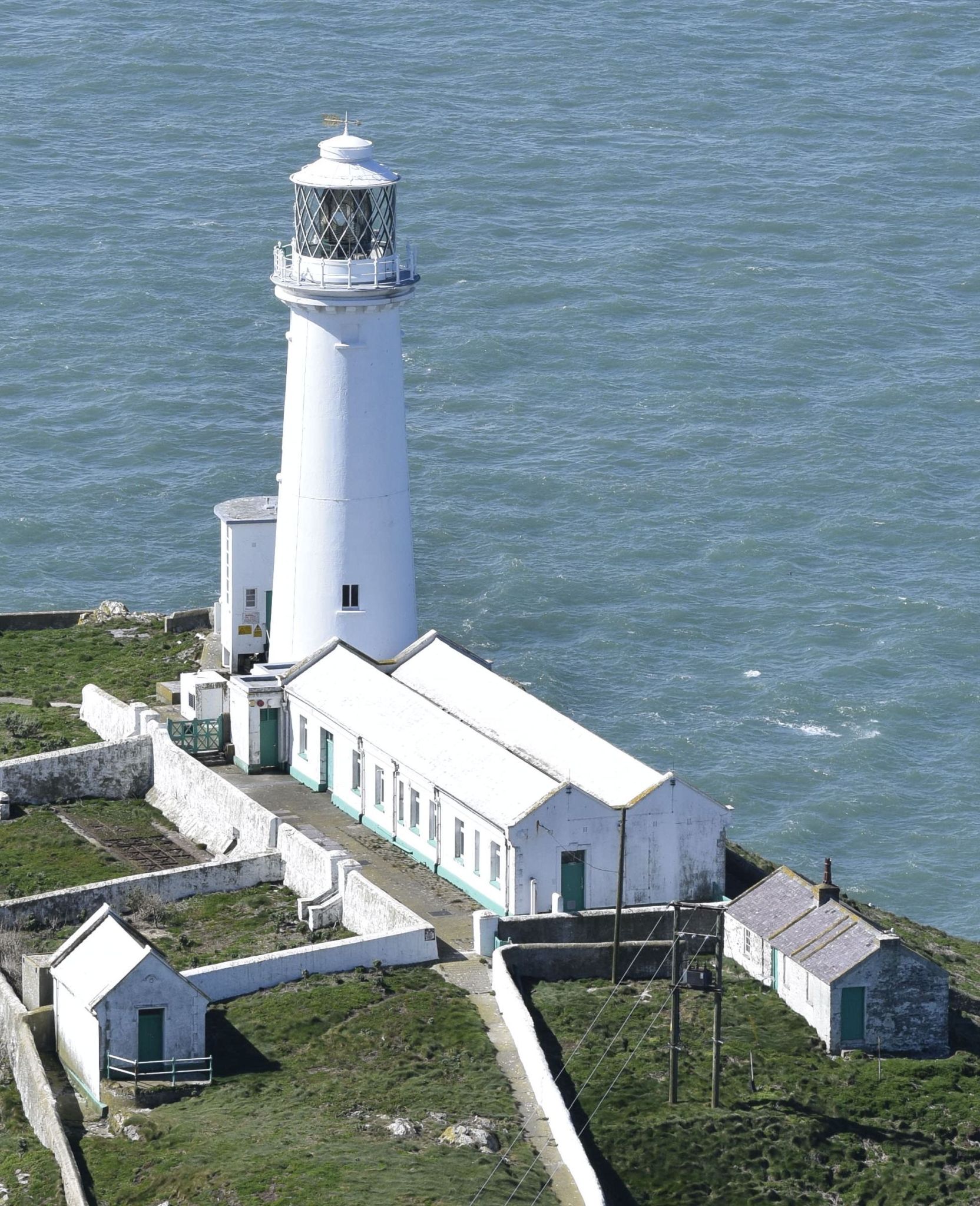
After the war some of the signal stations were reopened, but it was decided that the South Stack station would be made redundant. James Dodd was reassigned to be a lighthouse keeper at Point Lynas before retiring to Surrey where two of his sons had settled. Many mariners and shipowners protested the closure, but the Mersey Docks and Harbour Board was unmoved. The building itself was offered to Trinity House for accommodation of lighthouse keepers and visiting engineers, but they baulked at the offer as it had quickly deteriorated during its period of closure. In 1923 it was demolished. The contractors reclaimed much of the building materials, such as doors, floorboards and chimney pots, which were reused in projects around Holyhead. But the prospect of carrying the stones up the four hundred steps to the top of the cliff were too much, and most of them wound up in the sea.
The space where the telegraph keepers accommodation once stood is now just an empty grassy area, but it is still home to many families of black-backed gulls every spring, with their chicks greeting visitors to the lighthouse while the parents keep a cautious watch.
Acknowledgements
Some of the details of the telegraph station buildings comes from Ian Jones’ book South Stack: Anglesey’s Famous Lighthouse (2009), an excellent historical account of the lighthouse. It is published by the Isle of Anglesey County Council and is available from Amazon or the shop at Oriel Môn.

Find out more about South Stack and other lighthouses around the Welsh coast with my new book, Lighthouses of Wales.


